What a CAT Tool Really Does for Your Translation Budget.
03 October, 2026· Article by Maria Jones

Clients often notice an odd line on a translation quote: a discount for "fuzzy matches" or "repetitions". Others hear their language provider mention translation memories and termbases and wonder whether a robot is doing the work. The answer usually lies in a piece of software every professional translator uses daily but few clients ever see.
Computer-assisted translation tools, usually called CAT software, are the workbench of the modern translation industry. They do not translate on their own; they help human translators work faster, more consistently and with fewer errors.
CAT is not machine translation
The confusion is understandable. Both involve computers and both appear in conversations about translation technology. But they are different things. Machine translation generates a translation automatically. Computer-assisted translation supports a human translator who remains in charge of every sentence.
The concept dates back decades and has evolved considerably, as this overview of computer-assisted translation shows. Today, many CAT environments can also connect to machine translation engines, but the defining feature is still the human translator working inside them.
How the workbench works
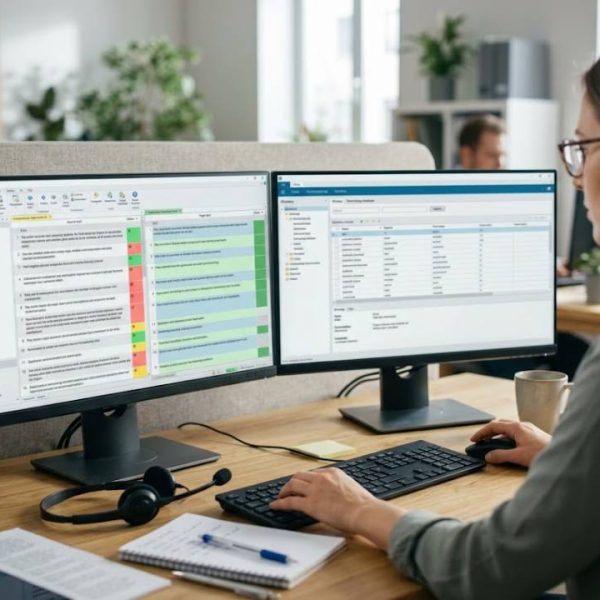
The software imports the source file, whether Word, InDesign, HTML, XML or software strings, and splits the text into segments, usually sentences. The translator sees the source on one side and types the translation on the other. Formatting, tags and layout are preserved automatically, so the finished file comes back looking like the original.
As the translator works, every segment pair is stored in a translation memory. The next time an identical or similar sentence appears, the tool suggests the earlier translation. The translator accepts, edits or rejects it.
Where the savings come from
That memory is what changes the economics of translation. Consider these common situations:
- A product manual is updated, and only ten percent of the sentences have changed.
- A website has the same footer, disclaimers and navigation on every page.
- A company publishes quarterly reports with recurring standard paragraphs.
- A software release changes a few hundred strings among thousands.
In each case, the software identifies what is already translated. Exact matches and repetitions are charged at a reduced rate, and the translator focuses on genuinely new content. Over months and years, the savings can be substantial.
Consistency you can measure
Beyond cost, a cat tool brings consistency. A termbase stores approved terms with definitions and notes. When the translator encounters "torque wrench" or "data controller", the tool shows the approved equivalent. Quality checks then flag deviations, missing numbers, inconsistent translations of the same sentence and formatting errors.
For brands and regulated industries, consistent terminology is not cosmetic; it is part of compliance and trust. A medical device manual that uses three different words for the same component confuses users and auditors alike.
Collaboration across teams
Larger projects involve several translators, reviewers and project managers working in parallel. Cloud based CAT environments let everyone share the same memory and termbase in real time. A reviewer's correction becomes immediately visible to all translators, and the project manager can track progress segment by segment.
For language service providers offering translation, localisation, transcription and interpreting under one roof, these shared resources also connect services. Terminology agreed for a written project can inform the glossary interpreters use at a related event.
What clients should ask
You do not need to learn CAT software yourself, but a few questions help you benefit from it. Does the provider maintain a translation memory dedicated to your content? Will you receive a copy of it if you change suppliers? How are matches priced? Is your terminology stored in a termbase and reviewed periodically? Are files processed securely?
The answer to the ownership question is particularly important. Your translation memory represents years of investment. Make sure your contract states that it belongs to you.
When evaluating providers, ask whether the translation agency uses CAT tools systematically and passes memory discounts on to you in quotes. A reputable agency will explain its match-rate pricing, confirm that your translation memory remains your property and describe its reviewer qualifications. These questions separate professional operations from brokers who simply forward files to the cheapest freelancer.
Preparing content for the best results
Clients can help these savings grow. Send editable source files rather than PDFs. Keep wording consistent in the source text, because varied phrasing for the same idea reduces matches. Reuse approved sentences when writing new content. Small editorial habits translate directly into lower costs and faster delivery.
Machine translation inside the workbench
Many translators now connect a machine translation engine to their CAT environment. When no memory match exists, the engine proposes a draft that the translator edits. Used carefully, this speeds up routine content. Used carelessly, it introduces fluent but wrong sentences. Ask your provider when and how they use machine suggestions, which engines they connect to, and whether those engines keep your data. A reputable provider will answer openly and adapt the approach to your content and confidentiality requirements.
A quiet tool with a big impact
Most people who read a translated manual, website or app never think about how it was produced. Behind the scenes, this software helps skilled linguists deliver accurate, consistent work at a sustainable price. Understanding the basics helps you ask the right questions, read quotes with confidence and build a translation programme that gets more efficient every year.
Recent Posts

Séduire le public coréen, le...

Kurzzeichen oder Langzeichen, ...

Business Translation That Keep...

What Large Companies Ask Befor...

Traduzione in Arabo per Aziend...

Traduzione Giurata dei Documen...
Share it.
Links
We use cookies
We use cookies to give you the best online experience, remember your preferences, and understand how the site is used. You can accept all cookies, reject optional ones, or choose which categories to allow.
Privacy PolicyCookie preferences
Choose which cookies we can use. Necessary cookies stay on because the site cannot work without them.
For more details, read our Privacy Policy.